Innovative Packaging: The Brightest Bulbs on the Shelf |
||||||||||||||||||||||||
| Author : KKPACK Date : 12/10/2013 6:39:57 PM | ||||||||||||||||||||||||
The automobile industry has frequently made its mark on personal care packaging through techniques such as colorization and finishes, as well as the successful combinations of materials and shapes. A recent concept in car manufacturing may influence packaging designers to further take up the challenges of recycling. Roughly 85% of the materials to be used in a new model Kia Soul will be designed for recycling when the vehicle reaches the end of its drivable life. Plans are for the car to also feature an all-electric engine, which will further shrink its environmental footprint. (Please stay tuned for our January 2014 article on one of Aveda’s package recycling programs.)
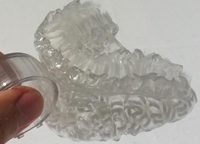
And then, there’s the virtual toothbrush, which not only saves time in a daily routine, but provides quick customization and utmost efficiency. With no actual resemblance to a standard toothbrush, the Blizzident custom 3D-printed “toothbrush” promises to clean your mouth in six seconds, and is custom-made for a perfect fit. Each brush starts with an impression or 3D-scan of your teeth, which is then uploaded to Blizzident for manufacture of the toothbrush using 3D printing. (Virtual techniques are also on the rise for cosmetics packaging, as you’ll see in this month’s feature on Package Development in this issue.) Innovation, inspired by the ordinary and the extraordinary, remains at the heart of the beauty industry, whether with personal care, fragrance or color cosmetics. And packaging often serves as the key conductor for interpreting innovation to consumers. From clever bottles, caps and cartons, to evolved dispensing systems, compact sizes, captivating decorating techniques and even new gestures, the competitive drive for “newest,” “most effective” and “most desirable” has never been stronger.
During 2013, Dr. Luebcke says key areas of development have included improvements in airless packaging to keep air-unstable ingredients “fresh,” innovative releases in the mix-immediately-before-use area and also in personalization, where smart packaging is being used to help the consumer understand their particular skin care needs and apply the product accordingly. In particular, he cites the following examples of “notable innovations” reflecting these trends:
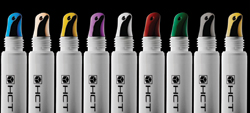
•Further and more ingenious steps prevent counterfeiting of high-end beauty products, such as IdentMarker developed by Rathgeber, which uses solid-state materials that give a unique optical spectrum. Dr. Luebcke says, “These exciting innovations in personal care packaging have achieved game-changing advances in the ways that packaging interacts with its contents and with the consumer.” But while Dr. Luebcke’s examples shine, how many beauty packages are truly innovative? It depends on how you define the term. Innovation seems to encompass everything from a great design to a time-saving feature, a two-in-one product, or even new ways of doing business. Today, innovative thinking lends itself to every part of corporate planning and product development. Innovation Defined Darren Eade, vice president of sales, Kemas USA, admits: “It’s very hard to come across any ‘true’ innovations these days. Most of what we see are rehashed ideas that are simply packaged in a different way.” He says, “For me, the only criteria that defines an innovative package is when it’s never been done before and is considered truly unique.” Eade says that most of today’s trends lean toward one of two main aspects: decorative effects and delivery systems. “There are only so many shapes that can be achieved,” he says, “therefore, there is not much you can do as far as calling something truly innovative. So we’re having to focus on the areas where we can really make a difference.” For Kemas, this means a primary focus on innovation is currently based not only around new packaging concepts for lipsticks, but also around unique decorative options. John Pyrzenski, sales director for HCT Group, agrees that innovation is a subjective term. He tells Beauty Packaging: “Improving the performance of a common packaging profile is just as paramount as developing a new delivery system or new technology platform. As long as it is a better solution, then it is considered innovation.” For instance, says Pyrzenski, “Versatility in common packaging is in demand, whether through decoration, design or delivery. The ability to utilize a proprietary package across multiple SKUs while creating a unique user experience seems to be a common trend in design direction.” Pyrzenski says HCT is currently developing lines of packaging based on this concept. At Arkay Packaging, Laura Carey, director of sales, says innovation relates to current trends such as new coatings, special effects and textures. Delivery Systems/Applicators As mentioned, delivery systems is a prime area for innovative products to emerge. So too are applicators and accessories.
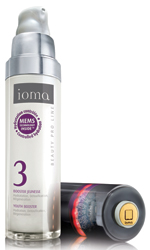
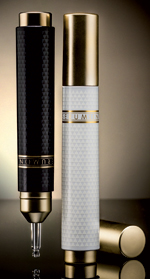
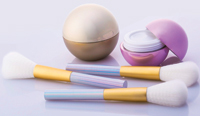
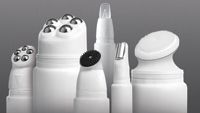
With skin care remaining one of beauty’s top performers, new-to-market delivery systems and applicators are as sought after as new, efficacious formulations. Cosmogen is known for its wide variety of applicators for skin care, including brushes. Charlotte Clabaux, the company’s marketing manager, says they have seen quite a few trends from brands looking for innovative applicators, with delivery systems at the top of the list. She says customers want functionality as well as practicality. Cosmogen offers this in its 2-in-1 combinations, including: a pack and applicator with a multifunctional brush/applicator for different uses (such as precise dispensing, scrubbing, cooling effect, massaging); ergonomic and time-saver solutions; and airless tubes with an on/off system. She says sensory effects during application are in demand, such as smoothness, micro stimulation, cooling effects and scar treatment. Development of advanced applicators that aid in formulations penetrating the skin has also become a priority. At Lombardi Design & Manufacturing, Jack Albanese, director of new business development, says skin care is synonymous with innovation. Lombardi has partnered with Nanomed to bring to market a technology that drives product deeper into the skin through the use of microstructures embedded on a silicon chip.Albanese says, “When placed on a dispensing tip or applicator, they act to temporarily compromise the skin’s surface providing a clear path for treatment formulas to get into the skin with significantly enhanced results.” Aside from the aesthetics and enhanced functionality of delivery systems, Dr. Punchard points to innovations that highlight practicalities: the compressed aerosol launches in the UK by Unilever for the company’s female deodorants (providing the same functionality but with much reduced packaging); and secondly, the dual aerosol hair colorant (now launched across several brands worldwide) that completely removes the self- mixing step and enables the product to be used as a when-needed rather than as a single application. Deco Reigns
Crackle, dewdrop and spider web effects are a few examples of Kemas’ innovations. Eade says, “The crackle effect is our latest decorative creation whereby we use a proprietary spraying technique coupled with a unique ink compound.”However, he adds: “Our most recent innovations can only be presented to the public by personal request.”
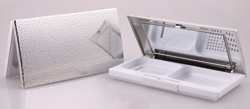
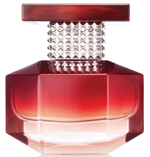
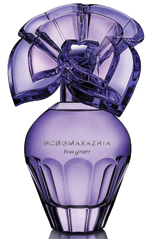
But while decorative techniques can attract consumers in stores, when it comes to packaging design for items sold online, the strategy may call for a different type of forward-thinking approach. Mintel’s Dr. Punchard says, “I think that Internet sales have changed the way that designers think about packaging. If the consumer can’t pick up the pack to read and you can’t be sure that a website will show anything other than front of pack, then that front of pack becomes a very important billboard. I’ve seen the removal of clutter and a focus on clear simple front of pack statements. Also there seems to be a move away from using photo imagery on packs.” On websites, he says, this can be accommodated elsewhere on the page without being on the pack, and simple graphics are more likely to reproduce well on screen. Dr. Punchard also says that advanced technology has fostered a reverse in certain brands’ thinking that consumers crave the reverse. “I think that there is in fact a bit of a computer/automation/brand backlash that is driving the trend toward small brands/small batches and hand made/artisanal products,” says Dr. Punchard. “For these basic pack types, simple graphics and letterpress or screenprint style graphics bring an element of craft to the packaging.” But, ironically,” says Dr. Punchard, “many of these smaller brands are reliant on the Internet to reach their consumers.” Caps, Closures and Compacts Metals and metallics, with their shiny attractiveness, add greatly to packaging’s allure, and have inspired a number of new techniques for caps and closures, as well as compacts. Innovative caps draw lots of attention at Lombardi, where Albanese says, “We continue to see a need for fragrance caps with free flowing, organic shapes. Our most recent example is the metallized bow we produced for the Victoria by Victoria’s Secret fragrance.” The metallized bow is married to a metallized shoulder piece and a Surlyn cap, also produced by Lombardi. Albanese says the bow was created using specialized computer-aided design software and hardware installed at Lombardi. “Our design engineers sculpted the free-flowing bow with an electronic stylus in midair to make the bow appear as natural as any fabric would be—except our part is a rigid, injection-molded piece of art.” (For more on this design, please see the article in this issue.) Closure supplier C+N Packaging has followed the trend for metallic closures in combination with clear and glass-like aspects. Mairi Young tells Beauty Packaging, “Some time ago, C+N Packaging recognized the growing trend toward metallic closures and to that end, we vertically integrated our molding operations with in-house metallization in the USA and Poland.”
“In fact, says Young, “C+N pioneered the glass perfume stopper look for Juicy Couture and we continue to meet customers’ needs.” Another innovation for C+N, according to Young, is silk screening on a UV spray to give a smoky look such as that for Ermenegildo Zegna’s Uomo. “This technique required the expertise and teamwork of many leading suppliers worldwide,” she says. HCP’s Pickford says they recognized the “primal allure of metal as the eternal trend for premium finishes,” which led to the development of Magnum, a high-quality, aluminum stock cosmetics range that uses trendy colored plastic trim as a contrast. The allure of metal has also led to a key change that will be made to adapt an existing HCP production site in China to concentrate on aluminum components. This new operation will also include a large number of transfer pressing, impact extrusion and automatic anodizing capabilities. “Aluminum was previously a material not fully integrated in our production program. We saw a real need in the market and as a packaging manufacturer, it was a necessity to offer an integrated solution,” explains Eddy Wu, HCP’s CEO. Sophisticated Tubes Tubes have become more prevalent than ever, even for high-end products. Labels, shapes and decorative techniques have risen in sophistication to meet demand.
Adolfsson says, “Companies mostly come to us asking for help with sealing new tube materials, filling new products, single or multi-color, including our new Swirl pattern.” To help customers with this, Norden (one of Coesia Group’s companies) has a test lab in Kalmar, Sweden, with four to five machines equipped with all the latest features. “This is a unique and valuable service we offer our customers,” says Adolfsson. How does advanced machinery contribute to innovative packages? Adolfsson says a couple of things stand out as very helpful. “One is robotic in feed systems since they are as efficient with oval tubes as they are with regular round tubes. The other is our third generation hot air sealing system. With better heat control we are able to seal thinner materials with maintained speeds and appearance.” Need for Speed In this fast-paced world, where “new” reigns—and has a shorter lifespan than ever, in part due to the Internet, brands and suppliers face the double edged sword of a product that needs not only to be innovative, but quick to market as well—a dilemma that also requires thinking outside the box—and greater agility, especially on the part of the supplier. Mintel’s Dr. Punchard notes: “Packaging in beauty has always been fast moving, responding to a market that changes each season, particularly in color cosmetics. However, often this just drives a change in contents rather than in the packaging. I think that increasingly this isn’t enough and to really keep up with fickle consumers we’ll be looking to greater changes on a more regular basis. Fortunately many packagers are becoming more agile and able to cope with rapid changes and short runs and technology that can enable short runs, such as digital print becoming more affordable. Indeed just as brands are being forced into more frequent packaging refreshes, it will be those packaging companies that can offer the greatest flexibility that will gain the greatest spoils.” Eade, of Kemas USA, says speed-to-market is very important “from the sense of claiming your position as the pioneer or creator of that technology.” That’s because he says, “unfortunately, in today’s extremely competitive world of manufacturing, the moment anyone catches wind of a new idea or concept, you have companies out there that would be more than willing to try and copy or duplicate those ideas.” Therefore, says Eade, the best way to establish your claim to a new innovation is to try and get launched to market in the quickest possible time frame. The downside, he says, “is that very rarely can anyone launch something quickly to market.” At HCT, Pyrzenski says each program is specific to its own needs, and HCT “works to create the best solutions to meet the demand of an ever-shrinking timeline.” He says as HCT “is fully integrated to offer full turnkey services, this does aid in our ability to deliver when timing is critical.” Carey of Arkay Packaging, notes: “The development cycle of innovative packaging shortens as our customers’ time lines do. You have to be nimble and responsive.”
Working locally, in close proximity to clients has been an asset for Lombardi Design & Manufacturing. Albanese says, “Our local engineering and production has helped us to offer some of the quickest speed-to-market options to our customers. This has allowed us to offer innovation unhampered by tight launch times. We make it a point to advise on lead times from the outset of a program and closely monitor any changes made by the customer.” Cosmogen has a different approach. Marketing manager Charlotte Clabaux says the company develops new items all year long and presents them to customers once the package is ready for production. “That means it can be rapidly produced and then marketed,” she explains. Clabaux says another solution is to “adapt and customize already marketed products and to provide them with a specificity that makes it unique.” Innovation Ahead What types of innovative packages wait on the horizon? Undoubtedly they will range from simple to complex. At Kemas, Eades says, “We are working on new developments that we hope will not only change the scope of packaging aesthetics and design in years to come but also enable the brands to open up a whole new range of design opportunities from a marketing perspective. Our focus right now is on releasing new products that can not only be considered ground-breaking, but also revolutionary in the sense that it can potentially change the way we see and feel packaging today.” Might we see new materials? “Materials are always going to be in the spotlight,” says Eade, but more from an ecological and environmental impact perspective. We’re seeing different materials come and go but for the most part, the industry tends to stay with what it knows works best.” Mintel’s Dr. Punchard, says, “I think we’ll see a battle between technology (offering convenience and help in getting just the right look, etc.) and artisanal (going retro, old school packs and perhaps a step backwards in functionality). So packaging that can offer functional benefits but without massive technical interventions will do best.”
|
Name:William
Company:KK Packaging Inc
Mobile:+1 (714) 787 8301
E-mail:info@kkpack.com
Office:265 S. Randolph Ave #170Brea, CA 92821, USA